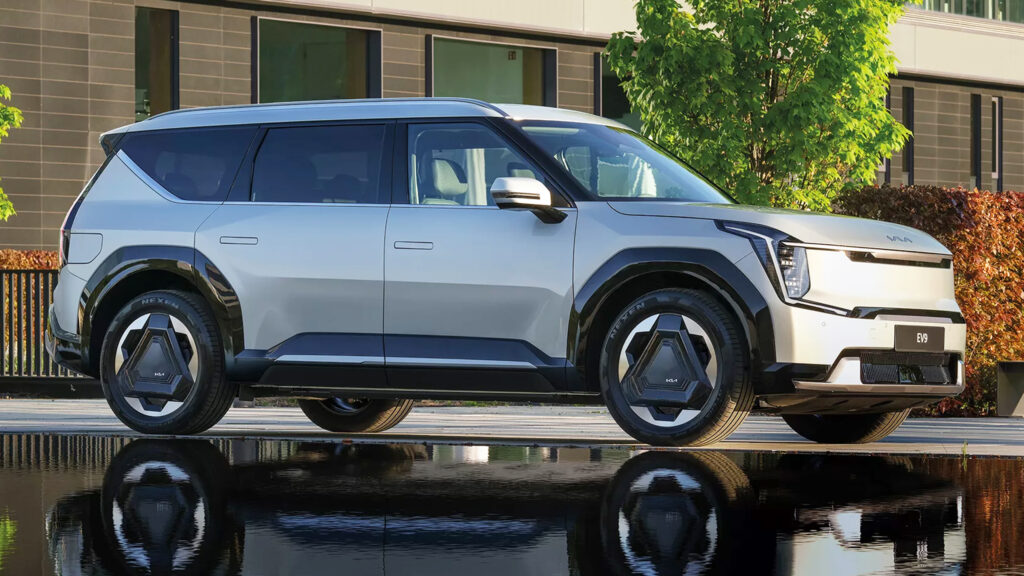
Kia EV9 Owners Face Growing Frustration Over Premature Battery Failures and Long Delay Times
The award-winning Kia EV9 has earned massive praise globally for its striking design, cutting-edge technology, and spacious three-row cabin. However, a dark cloud is beginning to form over the South Korean brand's flagship electric SUV. A growing number of owners across the globe, particularly in the United States and the United Kingdom, are reporting major battery pack failures that have left their premium EVs bricked or severely limited in range. Compounding the issue is a sluggish parts-supply chain, leaving frustrated drivers without their vehicles for months.
From Minor Glitches to Dead Battery Modules
The issue often manifests in a deceptively simple way. Some owners first notice that their 12-volt accessory battery drains completely, preventing them from even unlocking the vehicle. After jump-starting the car manually, a far more severe problem soon comes to light. While charging on a home AC unit, the high-voltage battery charge status will suddenly spike from around 80 percent to 100 percent in an instant, accompanied by a massive reduction in the estimated driving range.
Diagnostic testing using OBD-II scanners has revealed a troubling trend: while the vehicle display claims a full 100 percent charge, the battery is actually holding significantly less energy than its rated 99.8 kWh capacity. This is because several of the pack's 38 individual battery modules have unexpectedly failed or gone completely dead. For some unfortunate owners, the drop in overall capacity has slashed their vehicle's real-world driving range down to a mere 30 miles (48 km), rendering the three-row family SUV virtually unusable.
The Waiting Game for Replacement Packs
While Kia has been addressing these issues under its comprehensive eight-year battery warranty program, the repair process has tested the patience of many buyers. Dealerships have confirmed that complete high-voltage battery pack replacements are necessary in these scenarios. However, because of logistics bottlenecks and limited inventory of replacement components, owners are being told they must wait months for a new battery to arrive from South Korea. This leaves premium EV owners relying on loaner vehicles or stranded entirely, with no clear timeline for when their own cars will be returned.
Is History Repeating Itself for Hyundai Motor Group?
This is not the first time Hyundai Motor Group has faced widespread drivetrain and electrical headaches. In recent years, electric vehicles across the Hyundai, Kia, and Genesis lineups—built on the praised E-GMP architecture—suffered from catastrophic failures of their Integrated Charging Control Units (ICCUs). After a period of quiet, the conglomerate was forced to issue a massive recall in 2024 to address power loss issues, eventually extending warranties for affected customers as complaints persisted.
As of now, Kia has not issued an official recall for the EV9’s high-voltage battery module failures. However, as more reports emerge online and across enthusiast forums, consumer pressure is rising. If these battery failures prove to be systemic rather than isolated incidents, the manufacturer will likely have to take decisive action to preserve its reputation in the highly competitive electric vehicle segment.
Key Highlights of the Kia EV9 Battery Issues:
- Widespread Reports: Dozens of Kia EV9 owners in both the US and UK have detailed premature battery module failures.
- Dramatic Range Drop: Dead battery modules can cause the SUV's range to collapse to as little as 30 miles.
- Extended Wait Times: Sourcing replacement high-voltage battery packs is taking several months, leaving owners stranded.
- No Official Recall Yet: While covered under the 8-year manufacturer warranty, Kia has not yet initiated a formal safety recall for the issue.
Image Credit & Source: Original Article