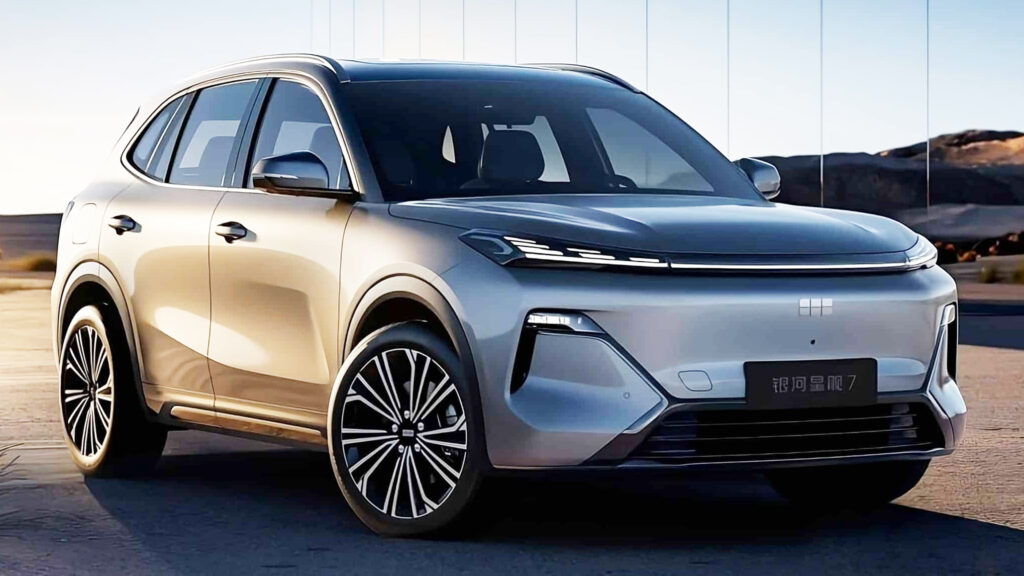
Unmasking the Scale: How China’s $11 Billion Subsidies Are Reshaping the Global Auto Industry
It is no secret that Beijing has spent decades nurturing its automotive sector, successfully transforming domestic players like Geely, Chery, and BYD into formidable global powerhouses. However, quantifying the exact magnitude of this state-sponsored financial backing has always been a complex challenge. Now, a comprehensive new report has shed light on the staggering amount of government support flowing into the Chinese automotive industry, revealing an immense gap between China and its global competitors.
According to a detailed study by the Organisation for Economic Co-operation and Development (OECD), Chinese automotive brands have benefited from an unprecedented wave of state assistance. The research, which analyzed 525 major global corporations across 15 different industrial sectors between 2005 and 2024, underscores how government intervention has accelerated China's dominance in the global market, turning it into the world's largest car producer.
The Enormous Scale of Beijing's Financial Backing
In 2019, Chinese car manufacturers secured an impressive $5.122 billion in the form of direct government grants, income-tax concessions, and below-market borrowings. To put this into perspective, the average government support during the same year was significantly lower in every other major region around the globe:
- Europe: $1.95 billion
- Asia-Pacific (excluding China): $1.93 billion
- North America: $1.20 billion
This massive head start allowed Chinese brands to lay the groundwork for the rapid electrification and technological expansion we see today.
Post-Pandemic Surge: The $11 Billion Milestone
The gap has only widened in the post-pandemic era. By 2024, state subsidies for Chinese automakers skyrocketed to an astronomical $11.394 billion. This represents more than double the amount received by domestic companies just five years prior, allowing Chinese automotive giants to scale at an unprecedented rate.
While other regions have also increased their spending to protect local industries and promote electric vehicle manufacturing, they still lag far behind. In 2024, North American companies saw their subsidies climb to $4.38 billion, largely driven by new green energy initiatives. Meanwhile, European automakers received $3.06 billion, and the wider Asia-Pacific region recorded $3.05 billion. Historically, the only time North American subsidy levels approached China's massive figures was during the emergency financial rescues of General Motors and Chrysler during the 2008 global financial crisis.
An Uneven Playing Field: The 'Doping' of Global Auto Markets
The OECD report does not mince words when describing the consequences of this lopsided financial support. The organization compared these persistent subsidy imbalances to "doping" in professional sports, warning that it distorts international trade, stifles authentic innovation, and forces foreign manufacturers to compete on an unfair playing field.
According to the findings, the financial support enjoyed by Chinese car companies was twice as high in absolute terms and a massive four times higher in relative terms compared to rivals based in OECD member countries. This deep-seated financial cushioning allows Chinese brands to aggressively price their vehicles, accelerate research and development, and scale up production far faster than their international peers.
As the global automotive landscape rapidly transitions toward electrification, these massive subsidy discrepancies are expected to keep fueling geopolitical tensions, tariff debates, and trade disputes, posing a significant challenge to regulators trying to maintain fair competition worldwide.
Image Credit & Source: Original Article